
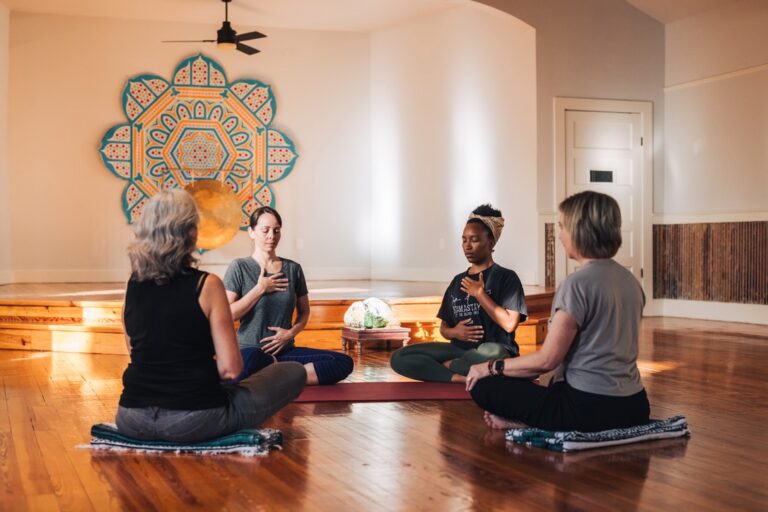
How we are in a given moment is our state. How we are over time is our trait. A yoga class can change how we feel for a time. A breathing practice can settle us in a stressful moment. Those state changes are valuable, but developing greater capacity over time requires practice.
Neuroscience supports what the yoga tradition has long recognized: what we practice repeatedly can shape what becomes more available to us. We may not expect a 1-hour class each week to fundamentally change how we move through the other 167 hours, but we often struggle with how to take our practice “off the mat.”
I recently facilitated my 30-hour Coming Home to the Body training in restorative yoga, and one thing I love about restorative practice is that it gives us the opportunity to practice rest. Rest becomes something we cultivate, rather than something we wait until exhaustion to need.
In the Yoga Sutras of Patanjali, one of the primary ancient texts of yoga, it says that the “fluctuations of the mind” are addressed through abhyāsa, or practice, and vairagya, or non-attachment (Sutra 1.12). What qualities make a practice transformative over time?
Patanjali says that abhyāsa is practice that is maintained consistently over a long period of time, without interruption. Further, he says it requires earnest attention.
What we practice repeatedly becomes more available to us. This is the path by which our state becomes a trait. Smaller practices, integrated into daily life, often matter more than relying exclusively on longer but infrequent practices.